
StockPal
Every POS system offered features. None optimized for liquor retail speed.
StockPal is a purpose-built ERP and POS system designed exclusively for liquor retailers, eliminating the complexity of enterprise software.

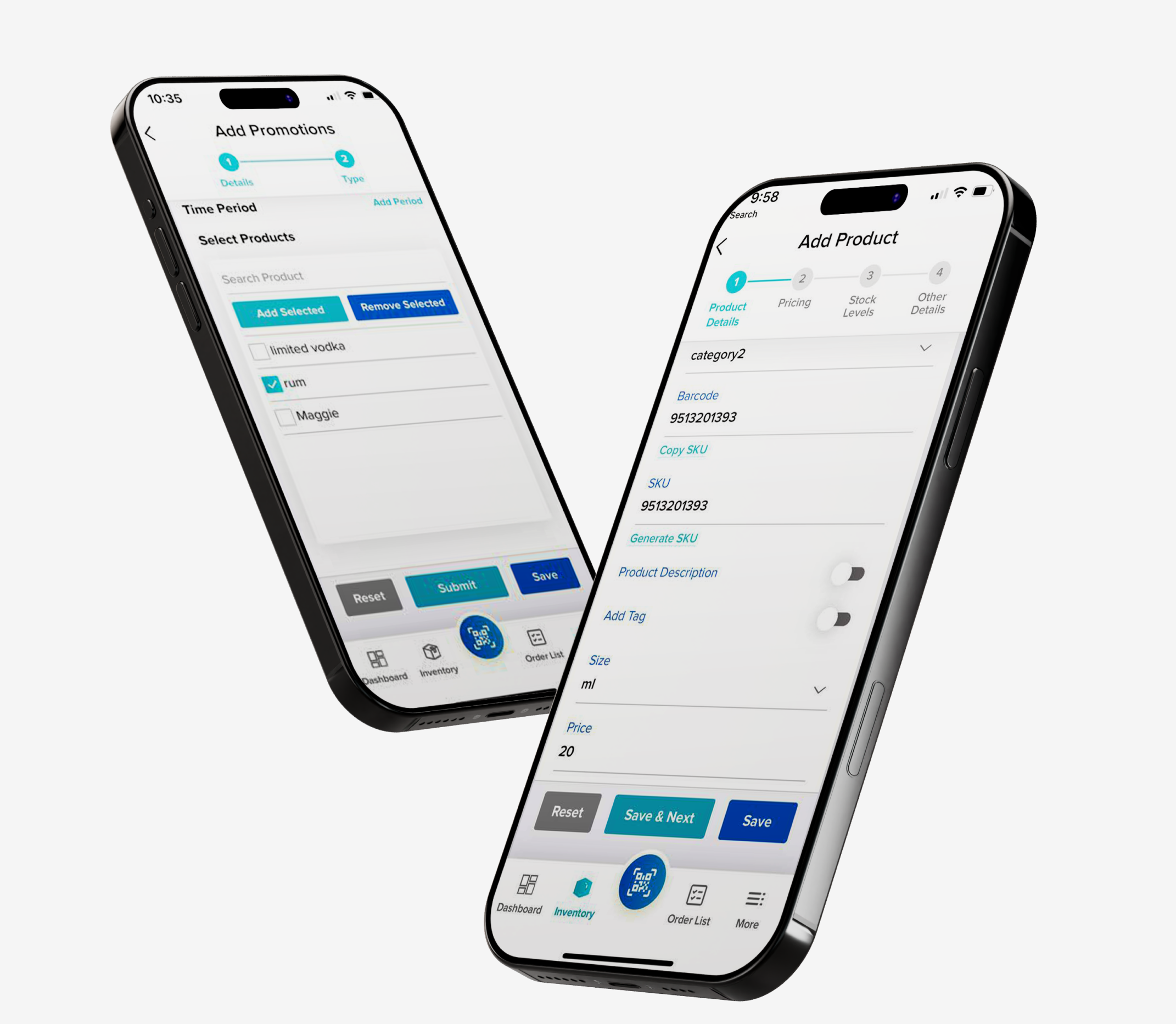
Essential features only. Retail-speed performance. No enterprise bloat.
Liquor retailers didn't need more features—they needed faster workflows during rush hours. StockPal stripped ERP complexity down to retail essentials, delivering stock management and POS operations that completed $500 transactions in under 60 seconds when customers lined up Friday nights.
The Impact



How We Thought

 Building StockPal required rejecting the enterprise software playbook of comprehensive features in favor of surgical focus on liquor retail's unique velocity and compliance requirements. We approached ERP design as a performance optimization problem where milliseconds during transactions mattered more than feature count.
1. Obsessing Over Transaction Speed
Performance requirement
We established a hard performance requirement: $500 orders must complete in under 60 seconds during Friday night rushes when customers queue and every delay risks line abandonment. This constraint forced ruthless UX simplification, no multi-level menus, no confirmation dialogs for routine actions, no feature discoverability at the cost of speed.
High Volume Transactions
We mapped the critical path for high-volume transactions: scan items, apply automatic promotions, verify age, accept payment, print receipt. Every interface element either accelerated this flow or was eliminated, creating a POS experience where staff muscle memory could process orders without conscious navigation.
2. Building Liquor-Specific Intelligence
Identifying common issue
Generic retail systems treat all products identically. Liquor has unique requirements we embedded as first-class features: expiration date tracking for craft beer and wine with automated alerts 30 days before products become unsellable, damaged product logging required for tax and compliance reporting, vendor-specific promotion management where discounts automatically apply based on distributor relationships, and age verification workflows integrated into checkout rather than bolted on as compliance afterthoughts.
3. Validating Through Clickable MVPs
The Validation of UI/UX
We built our first version as an Angular-based clickable prototype before writing backend code, deployed it to actual retail staff during non-peak hours, and watched them attempt real transactions. This revealed UX failures invisible in design mockups: buttons placed where wet hands couldn't tap accurately, confirmation steps that interrupted flow during rushes, search interfaces requiring precise spelling when staff needed fuzzy matching for thousands of SKUs.
The Final Prototype
We iterated the prototype through five design cycles based on this feedback before committing to production development, ensuring the final Java backend and Angular 11 frontend implemented workflows already proven in real retail environments.
4. Engineering for Reliability & Code Quality
100% Uptime
Retail POS downtime means lost revenue, so we architected for extreme reliability through comprehensive CI/CD pipelines using Bitbucket for version control, SonarQube for automated code quality testing catching bugs before deployment, and Sanity.io for error monitoring and alerting in production.
The Data Storage
Oracle database provided enterprise-grade transaction integrity and backup capabilities critical when system failures could mean lost sales data or compliance audit failures. This infrastructure investment meant retailers trusted StockPal for mission-critical operations despite being a startup competing against established POS providers.
5. Enabling Self-Service Through Intuitive Design
The Goal: Should be Easy to Use
Enterprise ERP requires weeks of training. We designed StockPal to be learnable in hours through intuitive workflows matching retail staff's existing mental models. Stock receiving uses barcode scanning—staff scan products and quantities auto-populate. Sales promotions use drag-and-drop calendars—staff see visual timelines rather than configuration forms. Analytics dashboards show charts and graphs—staff interpret visual patterns rather than raw data tables. This self-service design reduced support burden and enabled rapid onboarding when retailers hired seasonal staff for holiday rushes.
Architecture Snapshot
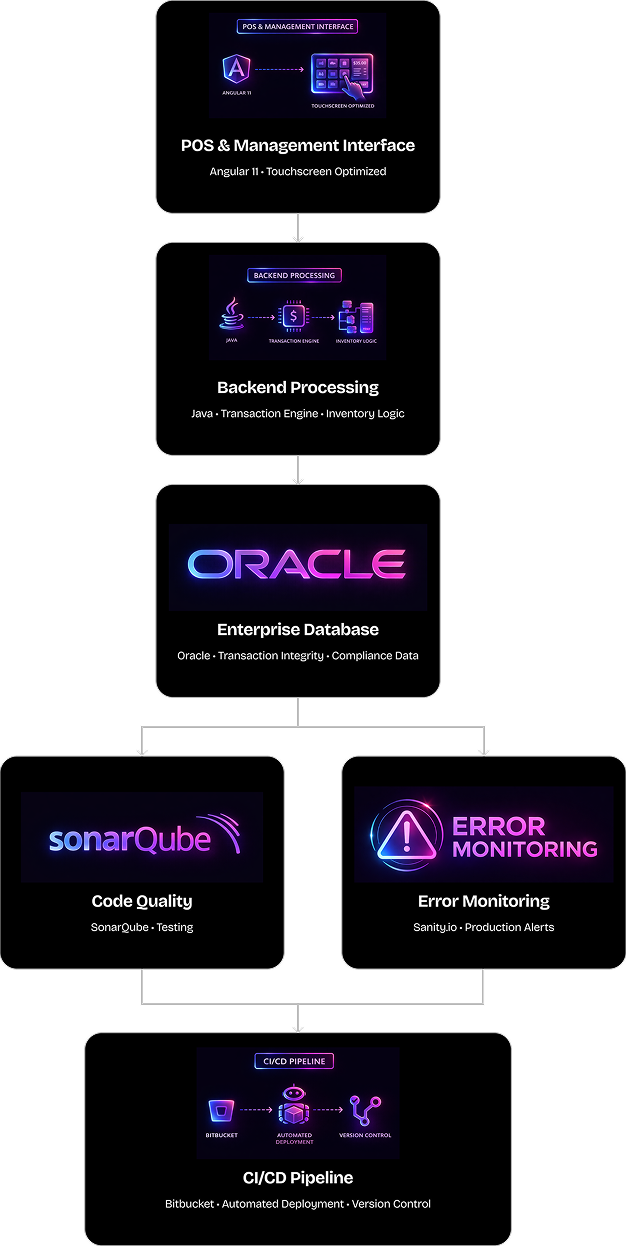
The Stack


Systems Delivered


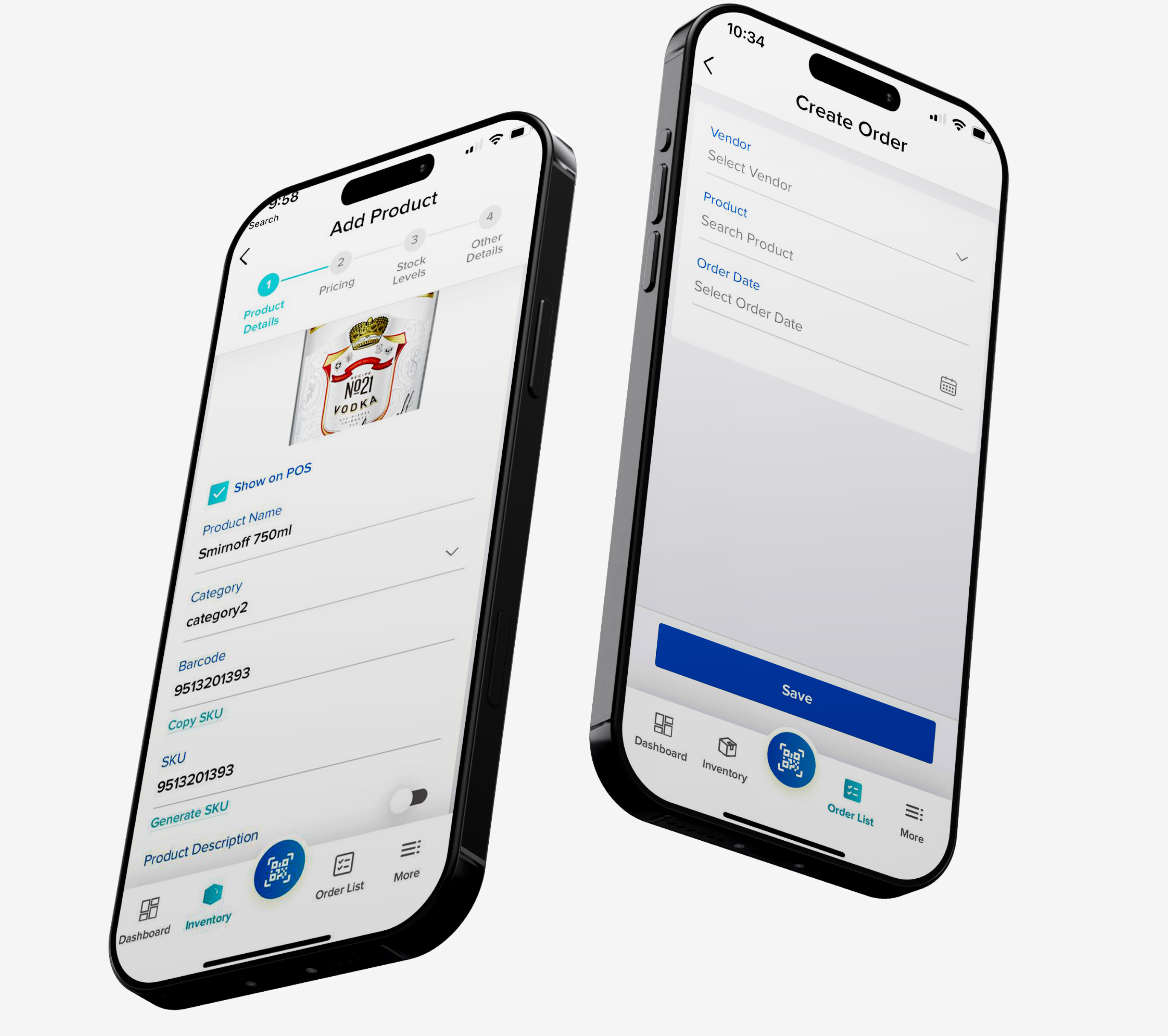
What Changed
- Sub-60-second transaction speed during Friday night rush hours
- 80% faster stock receiving through barcode and SKU scanning
- $4M revenue processed across 500k+ inventory items successfully
- Enterprise feature bloat replaced with liquor-specific essential workflows
- Automatic compliance tracking eliminated manual expiration and damage logs
- Zero-training intuitive design reduced onboarding from weeks to hours

 See How We Work

More Work Like This
Speak Directly With the People Who Build



+1.svg) D 908 - PNTC, Times Of India Press Rd, Prahlad Nagar, Ahmedabad, Gujarat - 380015, India
D 908 - PNTC, Times Of India Press Rd, Prahlad Nagar, Ahmedabad, Gujarat - 380015, India Langenthalstrasse 8A, 4912 Lotzwil, Switzerland.
 1204 Al Manara Tower, Business Bay Dubai, United Arab Emirates





 Built with enterprise standards for security, data handling, and delivery.Partnered with & recognized by global technology platforms.