
Posture AI
Posture problems were silent until they became painful.
Real-time posture detection. Personalized correction. Professional results without appointments.

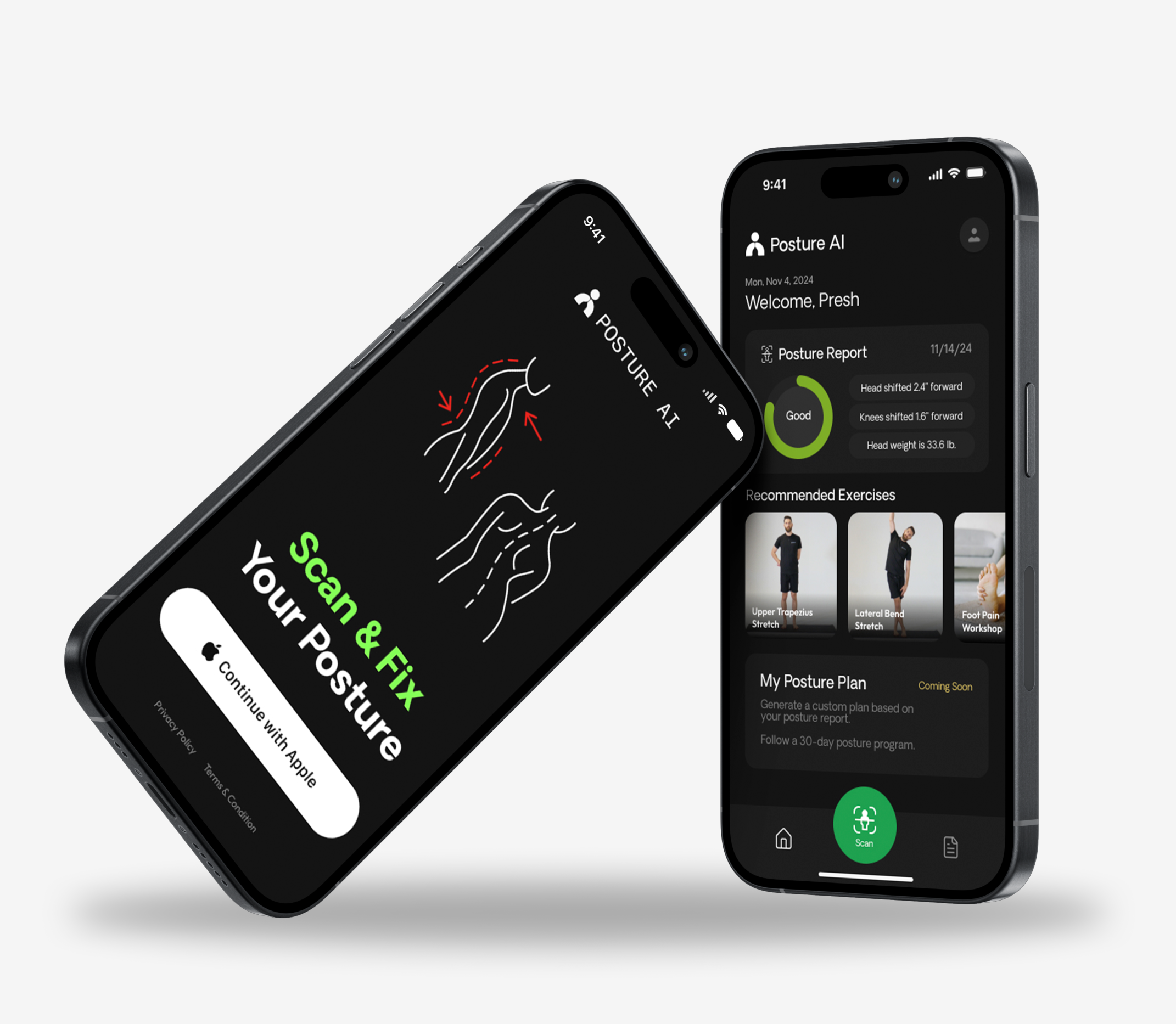
Posture AI is a mobile health application leveraging real-time computer vision and personalized AI to detect, analyze, and correct posture issues before they escalate into chronic pain.
Posture deterioration is invisible until it becomes painful—and by then, correction requires expensive physiotherapy. Posture AI brought professional-grade posture analysis and personalized correction into users' pockets through real-time AI vision, preventing chronic pain before it starts.
The Impact



How We Thought

 From invisible deterioration to visible progress: Posture health, quantified.
1. Achieving Real-Time Accuracy with YOLO Models
Required Real Time Accuracy
We chose YOLO (You Only Look Once) models for their ability to perform object detection at 30+ frames per second, enabling smooth real-time skeletal tracking during user movement. Traditional pose estimation models introduced noticeable lag that made live feedback unusable for exercise correction. We fine-tuned YOLOv8 on a dataset of posture-specific keypoints—cervical spine position, shoulder alignment, hip tilt, lumbar curve—training the model to detect subtle misalignments invisible to generic pose libraries. This specialization allowed the AI to distinguish between normal anatomical variation and clinically significant postural deviations, providing assessment accuracy comparable to manual physiotherapy evaluation.
2. Building Personalization Through Biomechanical Analysis
Understanding Real Patient Problem
Generic exercise apps prescribe the same stretches to everyone. We recognized that posture problems are individualized—someone with forward head position needs different corrective exercises than someone with anterior pelvic tilt. Our AI analyzes the initial posture scan to identify specific deficiency patterns: tight hip flexors, weak lower trapezius, shortened pectorals, overactive upper traps. The 30-day routine generation algorithm then selects exercises targeting the user's unique biomechanical chain, sequencing them progressively as earlier corrections unlock the ability to address deeper misalignments. This creates a corrective pathway tailored to each user's starting dysfunction rather than one-size-fits-all programming.
3. Optimizing Mobile Computer Vision for Battery & Performance
Lightweight Architecture That Runs on Mobile
Running YOLO models on-device would drain iPhone batteries in minutes. We architected a hybrid approach: lightweight keypoint detection runs locally using CoreML and Vision Framework for instant visual feedback during scans, while the heavy biomechanical analysis happens server-side on Python-based GPU instances processing the frame sequence. This split keeps the app responsive and battery-efficient while leveraging cloud compute for complex postural calculations. TensorFlow Lite quantization reduced model size by 75% without sacrificing accuracy, enabling smooth AR skeleton overlay even on older iPhone hardware.
4. Creating Addictive Progress Through Visual Feedback
User Engagement
Behavior change requires visible progress. We designed the skeletal overlay to color-code problem areas—red for severe misalignment, yellow for moderate issues, green for healthy positioning—so users immediately see which body regions need attention. Daily scans track these color changes over time, creating a visual progress narrative that's more motivating than abstract posture scores. ARKit integration anchors the skeleton overlay to the user's body in 3D space, allowing them to walk around their phone and see their posture from multiple angles, building spatial awareness of how their spine actually curves versus how it should align.
5. Building Trust Through Education & Explainability
Trust on Process Through Education
Users won't follow exercise routines if they don't understand why. Each personalized routine includes educational content explaining the biomechanical relationship between their detected postural issues and the prescribed corrective exercises. If the AI detects forward head position, it shows how this creates cervical strain, explains which muscles are tight versus weak, and clarifies how specific stretches and strengthening moves rebalance the kinetic chain. This transparency builds user confidence that the AI understands their body and prescribes evidence-based corrections rather than random exercises.
Architecture Snapshot
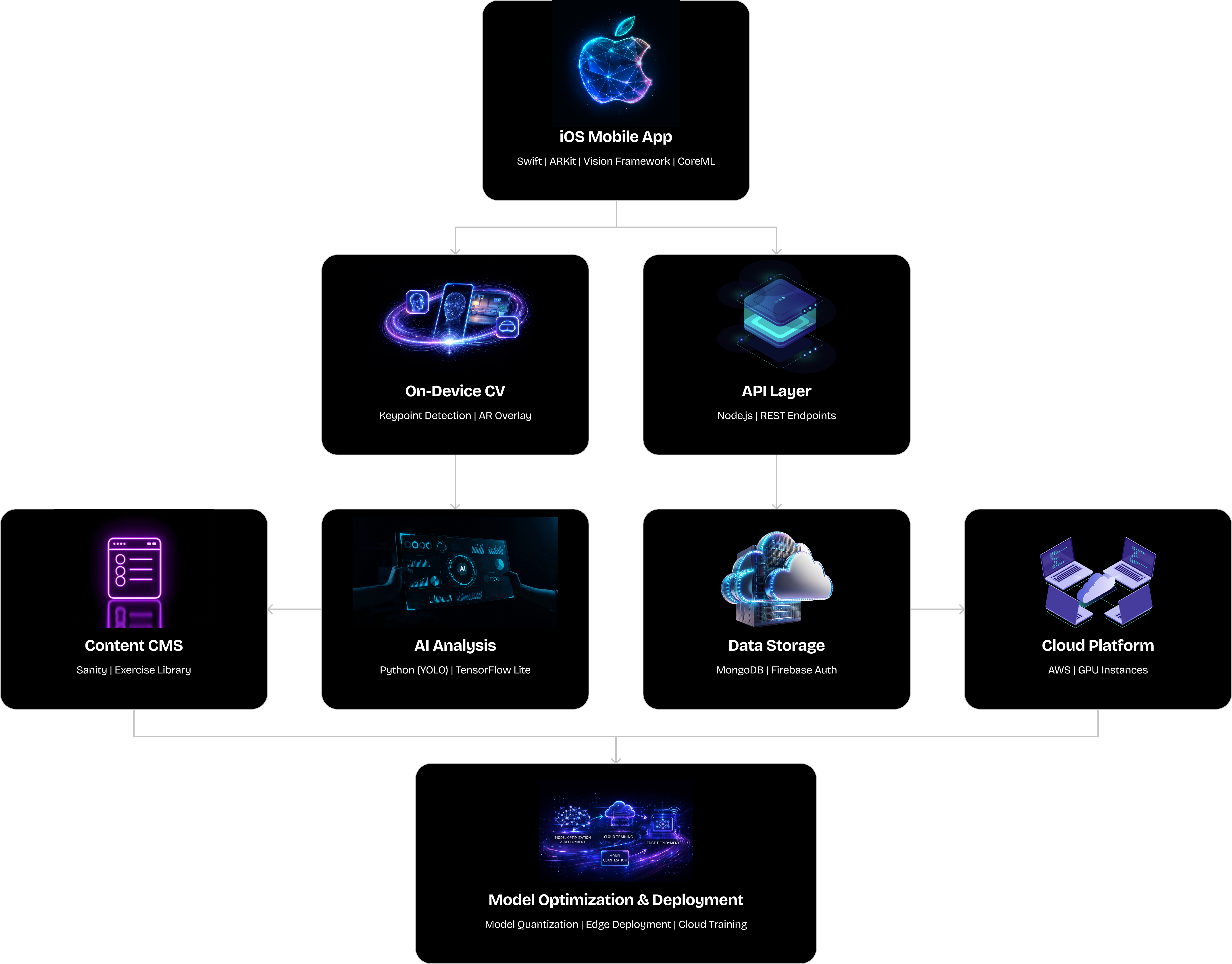
The Stack


Systems Delivered


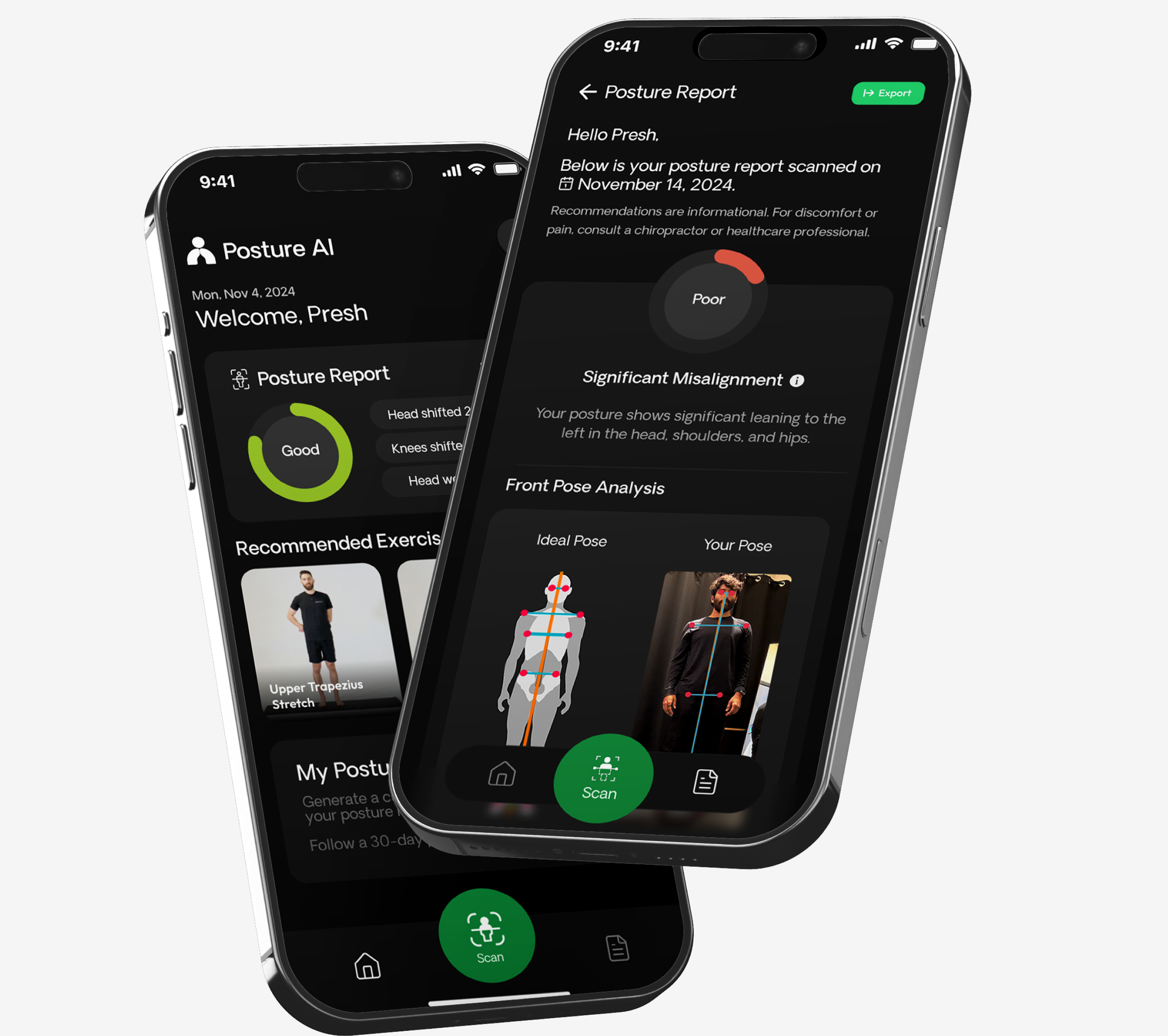
What Changed
- 3k+ Patients served from Posture AI
- 2k+ Postures analyzed using AI
- 30k+ USD Revenue generated

 See How We Work

More Work Like This


Speak Directly With the People Who Build



+1.svg) D 908 - PNTC, Times Of India Press Rd, Prahlad Nagar, Ahmedabad, Gujarat - 380015, India
D 908 - PNTC, Times Of India Press Rd, Prahlad Nagar, Ahmedabad, Gujarat - 380015, India Langenthalstrasse 8A, 4912 Lotzwil, Switzerland.
 1204 Al Manara Tower, Business Bay Dubai, United Arab Emirates





 Built with enterprise standards for security, data handling, and delivery.Partnered with & recognized by global technology platforms.