
ItCurves - Taxi Operations AI
Fleet intelligence locked behind SQL queries and dashboard clicks.
IT Curves is an internal agentic AI solution transforming critical fleet data across microtransit, paratransit, and fixed-route services.

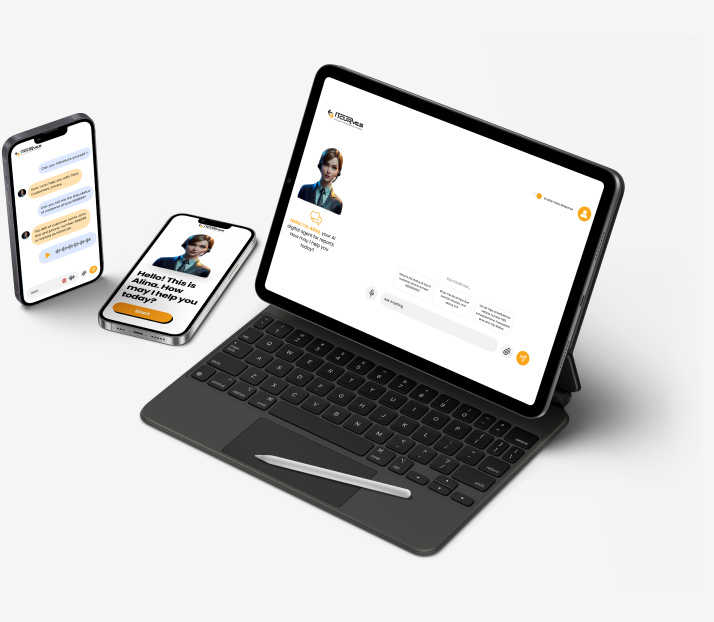
One question. Instant data. No SQL required. No analyst dependency.
Operations teams shouldn't need database expertise to answer basic questions about their own fleet. IT Curves' AI agent transformed natural language into SQL queries, turning "What's the ETA for bookings in the last 30 minutes?" into instant answers—eliminating the bottleneck of analyst dependency and technical skill requirements.
The Impact



How We Thought

 Building an internal AI agent for fleet operations required understanding that the barrier wasn't data availability—it was accessibility. We approached text-to-SQL as a language translation problem, teaching the system to understand operational vocabulary and convert everyday questions into precise database queries.
1. Mapping Operational Language to Database Schema
End User Persona
We recognized that operations teams don't think in tables and columns—they think in bookings, cancellations, taxis, and ETAs. Our first challenge was creating a semantic layer that mapped natural language operational terms to IT Curves' PostgreSQL schema. We built a comprehensive NLP model trained on the database structure, learning that "booking status" maps to specific status codes across multiple tables, "cancelled trips" requires joining reservation and cancellation logs, and "taxi location" pulls from real-time GPS telemetry. This semantic understanding allows the AI to translate "How many rides did we complete last week?" into the appropriate JOIN queries spanning rides, timestamps, and completion status tables.
2. Building Context Awareness for Ambiguous Queries
Solving Real Problem of Team
Fleet operations questions are often ambiguous without context. "What's the status?" could mean a specific booking, a vehicle, or overall operations. We implemented conversation memory and entity resolution to handle follow-up questions naturally. If someone asks "What's the status of booking #409904?" and then "When was it created?", the system remembers the booking ID context and queries the creation timestamp for that specific reservation. This contextual awareness makes the chat feel like talking to a knowledgeable colleague rather than a rigid query interface.
3. Optimizing for Real-Time Performance
Optimization for Each Answers
Operations teams need answers now, not after a 30-second query execution. We architected for speed by implementing Redis caching for frequently accessed metrics like daily trip counts and revenue totals, pre-computing common aggregations, and optimizing SQL query generation to use indexed columns. When someone asks "How many bookings in the last 30 minutes?", the system generates an efficient query using timestamp indexes rather than scanning the entire reservations table. Response times under 2 seconds make the experience feel conversational rather than computational.
4. Enabling Self-Training Through Query Feedback
Should Have Self Learning Capabilities
We built a feedback loop where the system learns from corrections. When a generated SQL query returns unexpected results or an empty set, team members can flag it, and the system logs the natural language input alongside the failed query pattern. Our vector database stores successful query patterns as embeddings, so similar future questions retrieve proven SQL templates. This self-training mechanism means the AI continuously improves its understanding of IT Curves' specific operational vocabulary and database structure without requiring constant developer intervention.
5. Designing for Non-Technical Trust
Trust They Have in System
Operations teams won't trust a black-box system with critical decisions. We designed transparency into every response: the AI shows not just the answer but the SQL query it generated and which database tables it queried. If someone asks "What's our total revenue yesterday?" and gets "$47,382", they can expand to see the exact SUM query on the transactions table. This explainability builds confidence that the system is pulling correct data and allows users to validate results against their domain knowledge, creating a collaborative intelligence rather than blind automation.
Architecture Snapshot
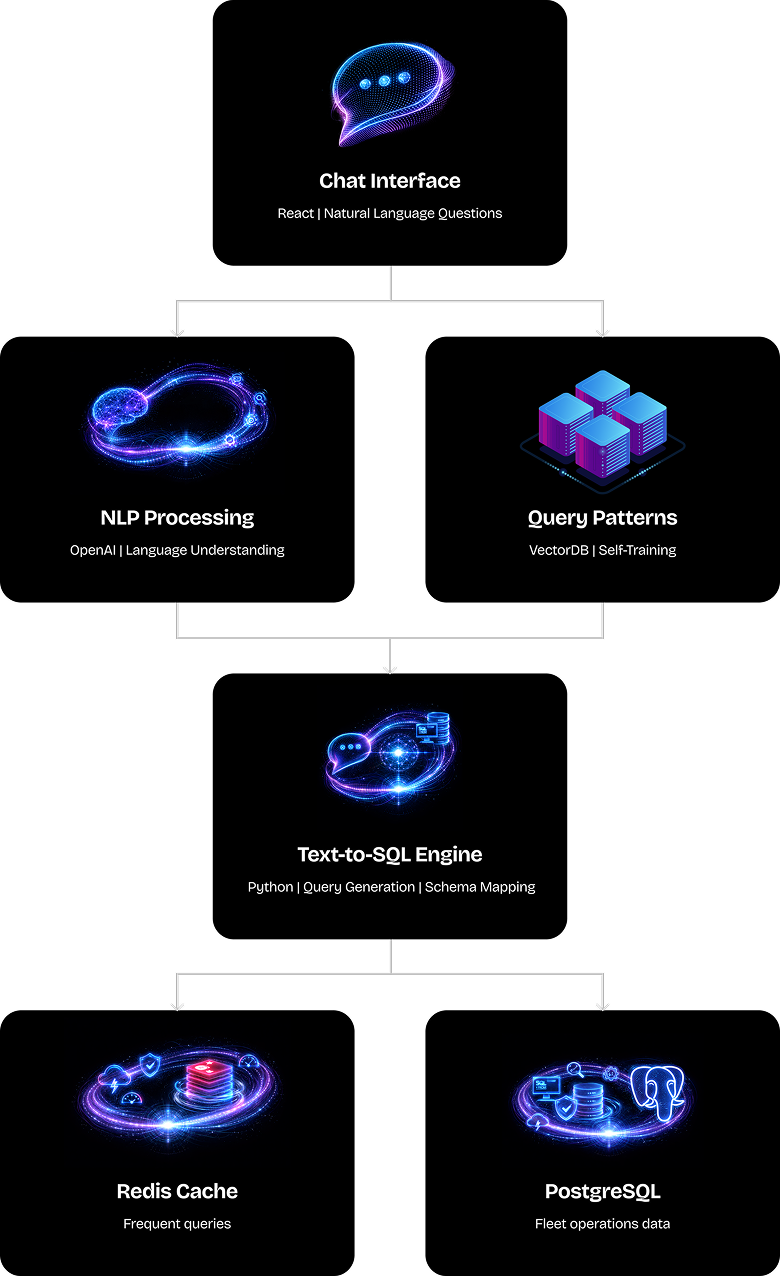
The Stack


Systems Delivered


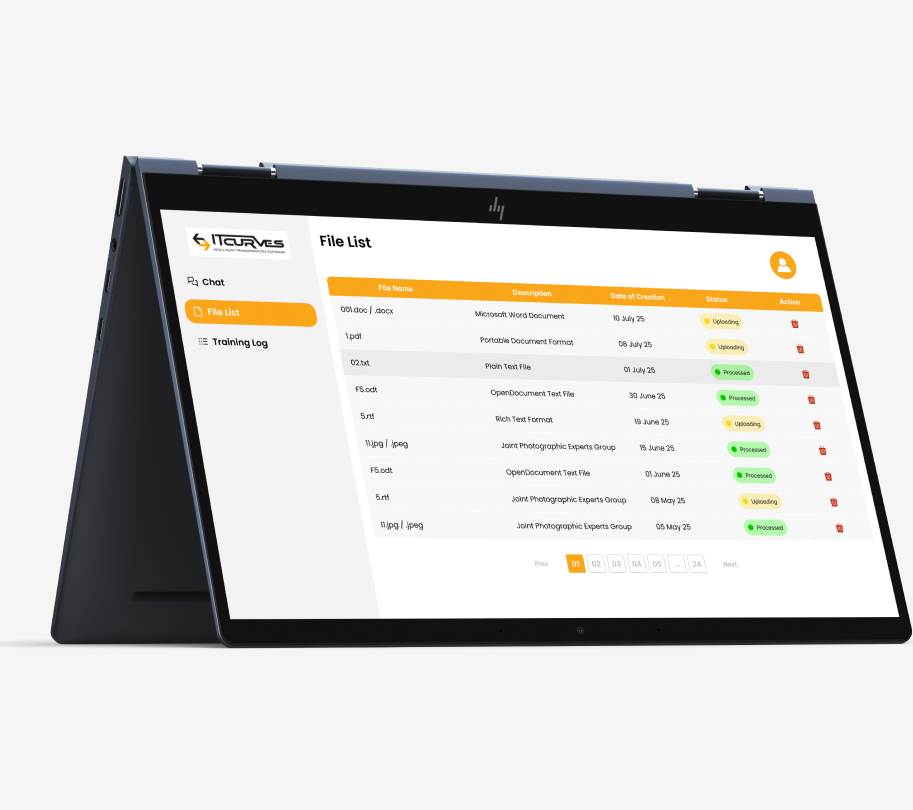
What Changed
- SQL expertise eliminated for accessing operational fleet data
- 99% time reduction in generating reports and metrics
- 24/7 data access without analyst dependency or waiting
- Single chat command replaced multi-screen dashboard navigation
- Real-time booking and revenue insights available instantly
- Self-service analytics empowered every team member independently

 See How We Work

More Work Like This
Speak Directly With the People Who Build



+1.svg) D 908 - PNTC, Times Of India Press Rd, Prahlad Nagar, Ahmedabad, Gujarat - 380015, India
D 908 - PNTC, Times Of India Press Rd, Prahlad Nagar, Ahmedabad, Gujarat - 380015, India Langenthalstrasse 8A, 4912 Lotzwil, Switzerland.
 1204 Al Manara Tower, Business Bay Dubai, United Arab Emirates



 Built with enterprise standards for security, data handling, and delivery.Partnered with & recognized by global technology platforms.